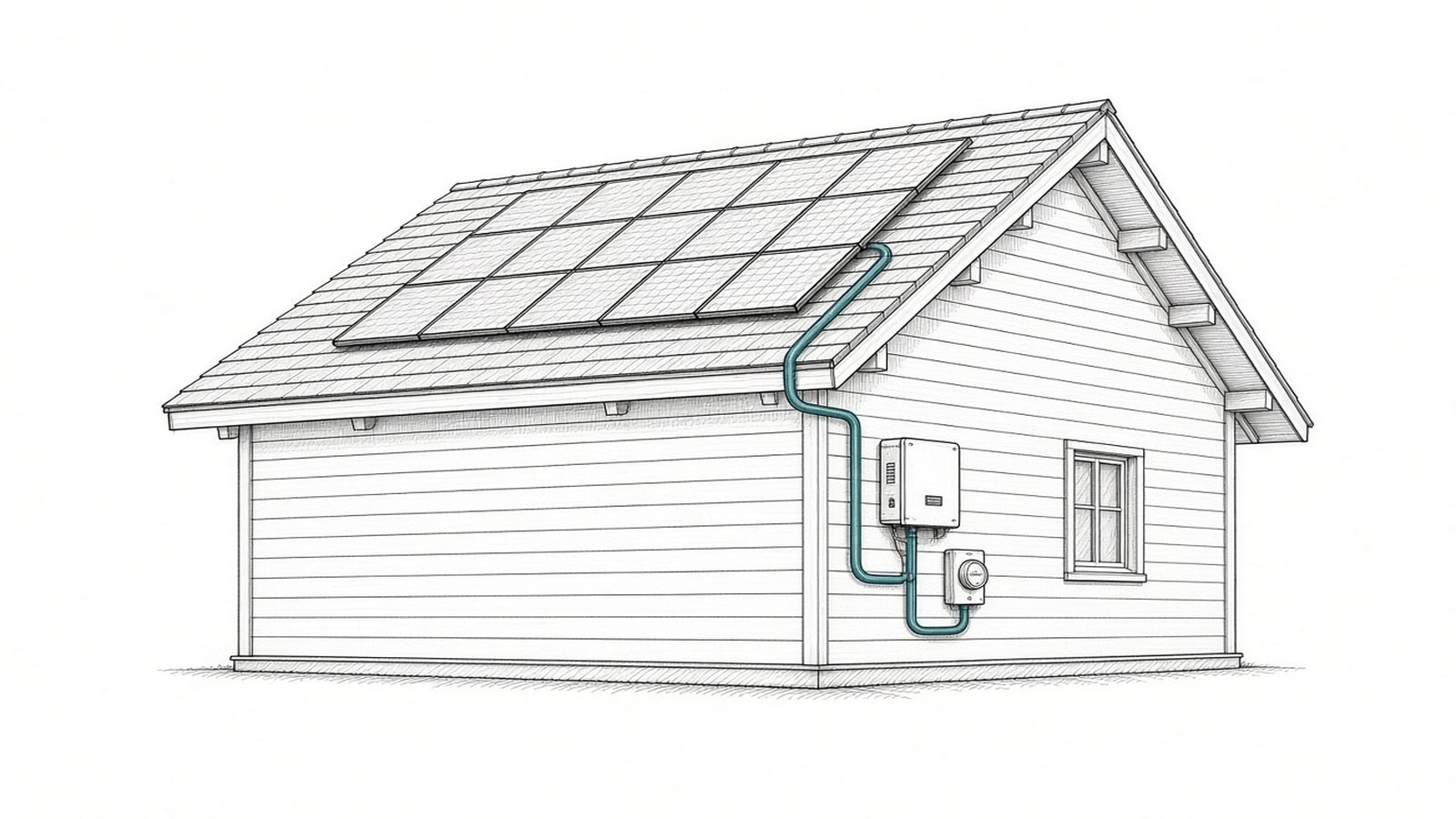
Solar works in Canada, but the math is different in every province and on every roof. A typical residential system runs $15,000 to $30,000 installed, and whether that pays off in 10 years or 25 depends on your electricity rates, your utility's net metering rules, and how much sun actually hits your shingles. Before you sign anything, here's what to check.
What a system actually costs

Most Canadian homes end up with a 6 to 10 kW system. Installed pricing usually lands between $2.50 and $3.50 per watt, so expect $15,000 to $30,000 all in, including panels, inverter, racking, wiring, permits, and labour. Quotes below that range deserve scrutiny: ask what's been left out. Quotes well above it usually mean a difficult roof, a long trench to the panel, or a required electrical service upgrade.
Add-ons change the number fast. Battery storage can add $10,000 or more and rarely improves payback unless you have outage problems or time-of-use rates. A panel upgrade from 100A service adds a few thousand. Get every line item in writing.
Payback depends on your province

Net metering is the whole game. In most provinces you feed excess power to the grid and get credited, but the rules differ. Alberta's rates swing with the market and some retailers pay well for exports. Ontario credits at the retail rate. BC Hydro credits kilowatt hours but pays out surplus at a lower rate. Saskatchewan cut its credit rate a few years back and payback stretched out. Quebec's electricity is so cheap that solar rarely pencils out on savings alone. Ask your installer to model payback using your actual utility's current rules, not a generic calculator.
Fix your roof first

Panels last 25 to 30 years. If your shingles have 8 years left, you'll pay $3,000 to $6,000 to remove and reinstall the array mid-life when the roof gets redone. Any honest installer will look at your roof age before quoting. If they don't ask, that tells you something. While you're at it, check shading: a chimney or a neighbour's spruce that shades the array for two hours a day takes a real bite out of production, and it's worse in winter when the sun sits low.
Sizing the system

Pull 12 months of hydro bills and size to your annual consumption, not your roof's maximum. Most utilities won't credit you for producing far beyond what you use, so oversizing just burns money. If you're planning an EV or a heat pump in the next few years, tell the installer so they can size for future load and leave room on the racking.
Hiring an installer

Get three quotes minimum, and compare them on the same basis: system size in kW, estimated annual production in kWh, panel and inverter brands, and warranty terms (product and workmanship separately). A good installer pulls the electrical permit, uses a licensed electrician for the connection, handles the utility interconnection paperwork, and gives you a production estimate they'll stand behind. Ask how many systems they've installed in your area, ask for two local references, and be wary of door-to-door sales and financing deals where the monthly payment hides the total price.