
Cabinets eat the biggest share of most kitchen budgets, so it pays to know your options before you call anyone. You have three routes: paint what you have, reface the boxes with new doors and veneer, or tear it all out and start fresh. The right answer depends almost entirely on the condition of your cabinet boxes, not the doors. If the boxes are square, solid, and the layout works, you can save serious money. If the boxes are swollen particleboard or the layout fights you every day, spending on paint is throwing money away.
Painting: the cheapest option, with limits

A proper professional cabinet paint job runs about $3,000 to $8,000 for an average Canadian kitchen. The word proper matters. Good painters remove the doors, degrease everything, sand, prime with a bonding primer, and spray the finish in a controlled setup. A brushed-on coat over dirty doors will chip within a year, and you see this constantly on doors around the stove and dishwasher where grease and steam attack the finish. Painting only works on solid wood or MDF doors. Thermofoil and laminate doors do not hold paint well no matter what the product label says.
Refacing: new face, same boxes

Refacing means new doors, new drawer fronts, and matching veneer over the exposed box sides and face frames. Expect $8,000 to $18,000 for a typical kitchen. You get the look of new cabinets at roughly half the cost of replacement, and the kitchen stays usable through most of the work. The catch is that refacing is only as good as the boxes underneath. If a box has water damage at the sink base, sagging shelves, or delaminating panels, refacing it is putting a new suit on a broken frame. A good refacing company will open every cabinet and tell you straight if a box needs replacing first.
Full replacement: when and what it costs
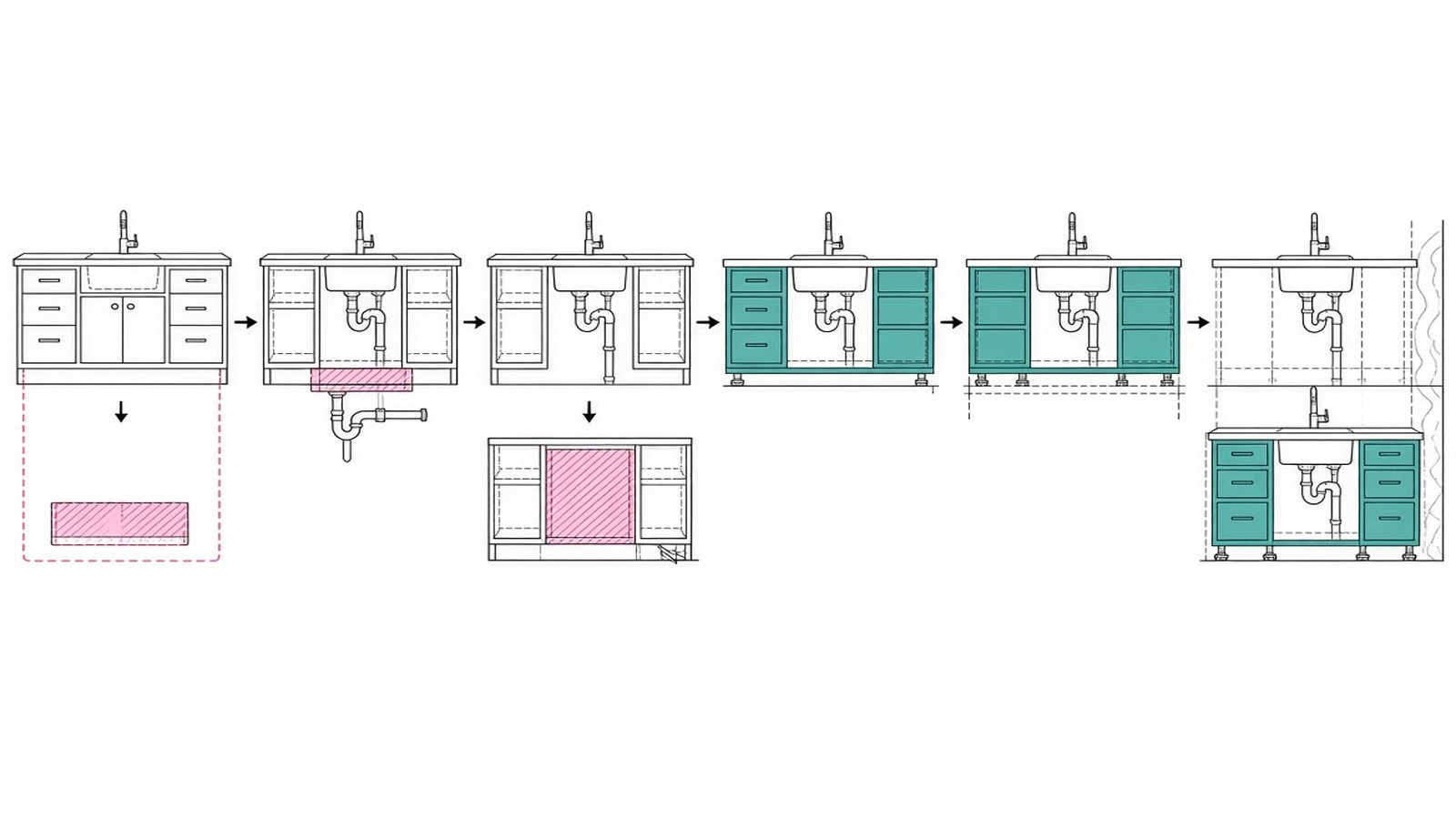
Full replacement typically lands between $15,000 and $40,000 or more depending on box construction, door style, and whether the layout changes. Flat-pack lines like IKEA sit at the bottom of that range, custom shops at the top. Box quality is where the money hides. Particleboard boxes are fine in a dry kitchen with careful owners, but they swell badly with any water contact. Plywood boxes cost roughly 10 to 20 percent more and shrug off the sink leak that would destroy particleboard. Ask specifically what the boxes are made of, because two kitchens can look identical in the showroom and be built completely differently.
Hardware, soft-close, and timelines

Soft-close hinges and drawer slides are standard on decent cabinets now, so treat their absence as a red flag on any new quote. If you are keeping existing cabinets, retrofitting soft-close hinges runs a few dollars per hinge plus labour and makes an old kitchen feel newer than paint does. On timelines, plan for one to two weeks for painting, one to two weeks for refacing, and anywhere from six weeks to four months for replacement once you count manufacturing lead time. Custom and semi-custom orders in Canada routinely take eight to twelve weeks to arrive before install even starts.
Hiring: what a good cabinet contractor does

Get three quotes, and make sure they quote the same scope so you can actually compare. A good contractor measures the kitchen themselves rather than quoting off your numbers, checks your boxes before recommending refacing, and gives you a written spec: box material, door material, hinge brand, finish process, and lead time. Vague line items like "cabinet package" hide corners being cut.
Ask each bidder what happens if a panel arrives damaged, who handles the countertop disconnect and reconnect, and whether removal and disposal of the old cabinets is included. Those three answers separate organized outfits from the ones that will leave you stuck mid-project.